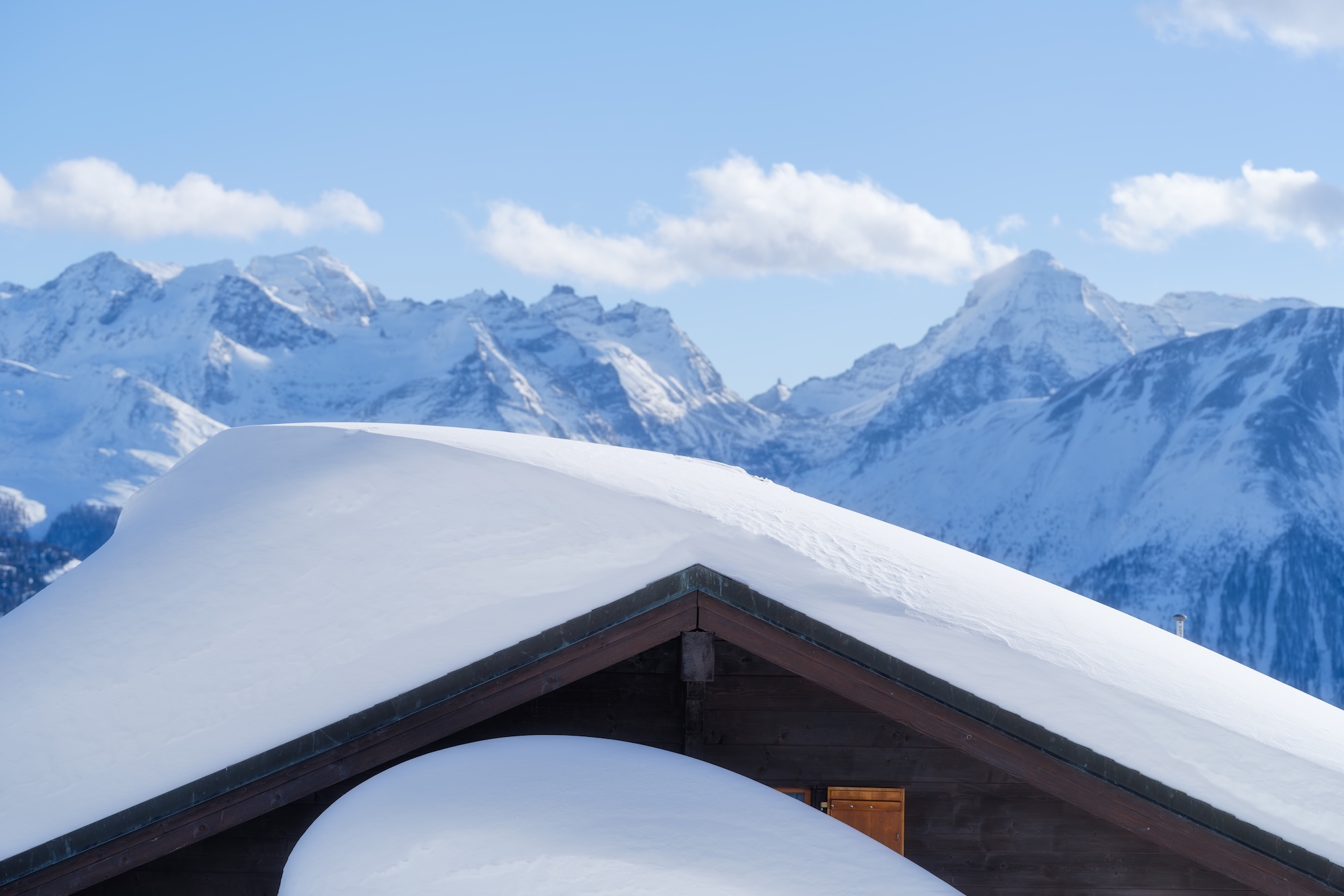

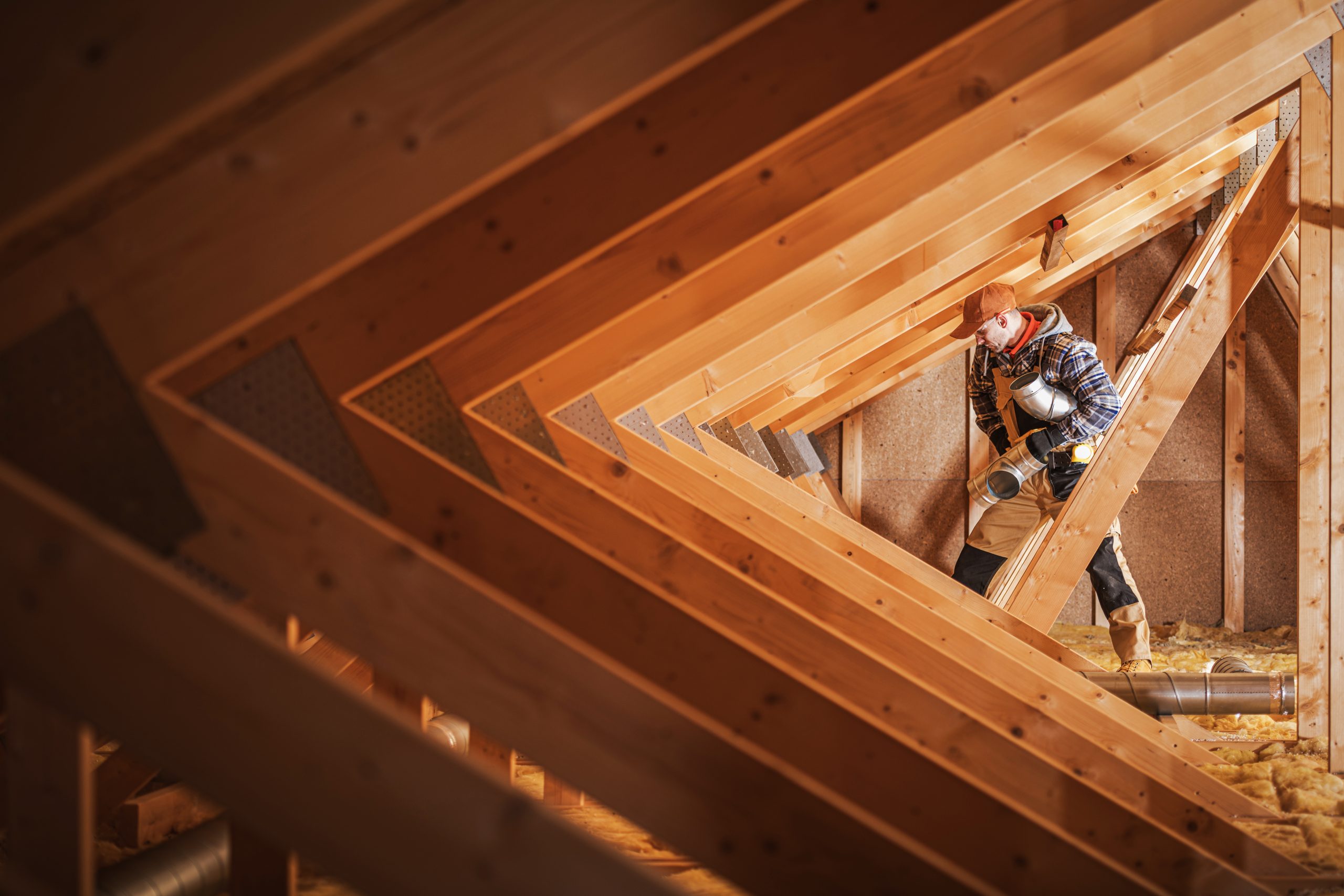
Wood framing in snow country, like Utah and Colorado, requires expert engineering and quality lumber for a building that can support significant snow accumulations, while also withstanding high winds during severe weather events.
While wood is a natural and fibrous material, it has great strength and can handle the pressure of significant snow loads for several months out of every year. The structural strength of a wood-framed home must also be able to stand up to uneven snow accumulations for extended periods of time.
Hardcore Constructors are experienced wood framers, with a portfolio of commercial and residential buildings in Utah and Colorado’s mountainous and snowy terrain, who know how to design and build a roof that can withstand any snow weight.
Wood Framing & Snow
Snow accumulation can add significant weight to a roof and the wood trusses supporting it. Depending on how the roof was built, as well as the accumulation, will ultimately determine whether the structure will be able to stand up to all of the added pressure.
- Roof slope. The pitch of the roof determines how much snow is able to accumulate. The steeper the slope, the less snow will collect. Lower-pitched roofs tend to accumulate more snow and the added weight that comes with it.
- Accumulation & Type of Snow. While the pitch of the roof can impact the amount of snow accumulation, the snow itself also makes a difference. Wetter snow, or snow that is starting to melt, has a higher water content and places a heavier load onto a roof, while drier snow is lighter.
The other stress to wood framing and trusses is the amount of time snow remains on the roof. The more compressed the snow becomes and the more ice also adds weight and over longer periods of time can take a toll on the wood trusses beneath.
Balanced vs. Unbalanced Snow Loads
Snow loads can be balanced or unbalanced on a roof. Balanced snow loads means the snow is evenly distributed and there is a more even added weight distribution, which is easier on the wood trusses below. Unbalanced snow loads means the snow has accumulated more heavily on one side of the roof than the other. That uneven weight adds more stress to the structure of the wood trusses and needs to be considered during construction.
Sliding Snow Load
Steeper pitched roofs combined with smoother roofing materials will help any accumulated snow to slide off, especially during melt. Smoother surfaces, like metal, are less likely to have snow accumulation and are more likely to shed snow sooner than other surfaces. Combining metal with a steeper pitched roof will minimize snow loads and the weight they add.
Snow Load Duration
The longer snow is allowed to accumulate on a roof, the more weight it will add through compression, water, and ice. Those regions with more significant snow accumulation and longer winters will require stronger wood trusses, as well as more frequent roof maintenance and snow removal to get through the winter months.
Snow and Wind Loads
Wood trusses that are engineered to endure significant snow loads should also be engineered to withstand strong winds in order to hold up during severe weather events.
Engineers typically use snow and wind data for each region they build in, taken from local building codes and environmental records, to determine and calculate the impact of potential snow accumulations and wind events on their structure.
A wood framing contractor, like Hardcore Constructors in Utah, knows all local codes as well as the calculations needed to determine the proper pitch, spacing, and supports needed to endure the harshest of winters where they build.
Wood Framing Built to Withstand Snow Loads
The best wood in Utah, Colorado, or other snowy states requires trusses are engineered to handle extreme snow loads. That means knowing each region’s potential snowfall and building to a worst case snow scenario.
Wood framing built to stand up to significant and uneven snow accumulations comes from high-quality, engineered lumber, have tighter spacing between purlins or horizontal roof supports, as well as proper bracing to increase the strength of the trusses. Good engineering combined with regular maintenance to remove snow accumulations will take the added load off the structure. Roof pitch and solar panel additions can also help shed snow.
Structural engineers are experts at calculating a location’s snow drift, the structure’s weight, and potential ice accumulation in addition to the capacity for long-duration snow loads. Contractor failure to account for and calculate snow density and duration in any region could cause rafters, beams, and trusses to sag, crack, or even collapse.
Strong winds can also put significant pressure on a building’s structure. Proper bracing in wood framing can help the building distribute the force of strong winds, while reinforced anchor points will ensure those trusses are secured well to the building’s frame. Wind pressure will have less impact on a structure if the building’s roof is sloped or gabled.
The Wood Framing Experts in Utah to Combat Snow & Wind
Hardcore Constructors is the premier Utah wood framing contractor for commercial and residential buildings that experience high snow loads. We have extensive experience and knowledge when it comes to building in snow country. You can trust us to design and frame any roof to handle heavy, and sometimes uneven, snow weight as well as winds.
We use machine stress-rated lumber to support heavy loads and frame our buildings with snow in mind. That means closer spacing between horizontal roof supports or purlins and trusses with specialized steel connectors for strong joints.
Contact Hardcore Constructors to find out how we can frame your next commercial or residential project that will not only stand the test of time, but any snow, ice, or wind storm Mother Nature can dish out.