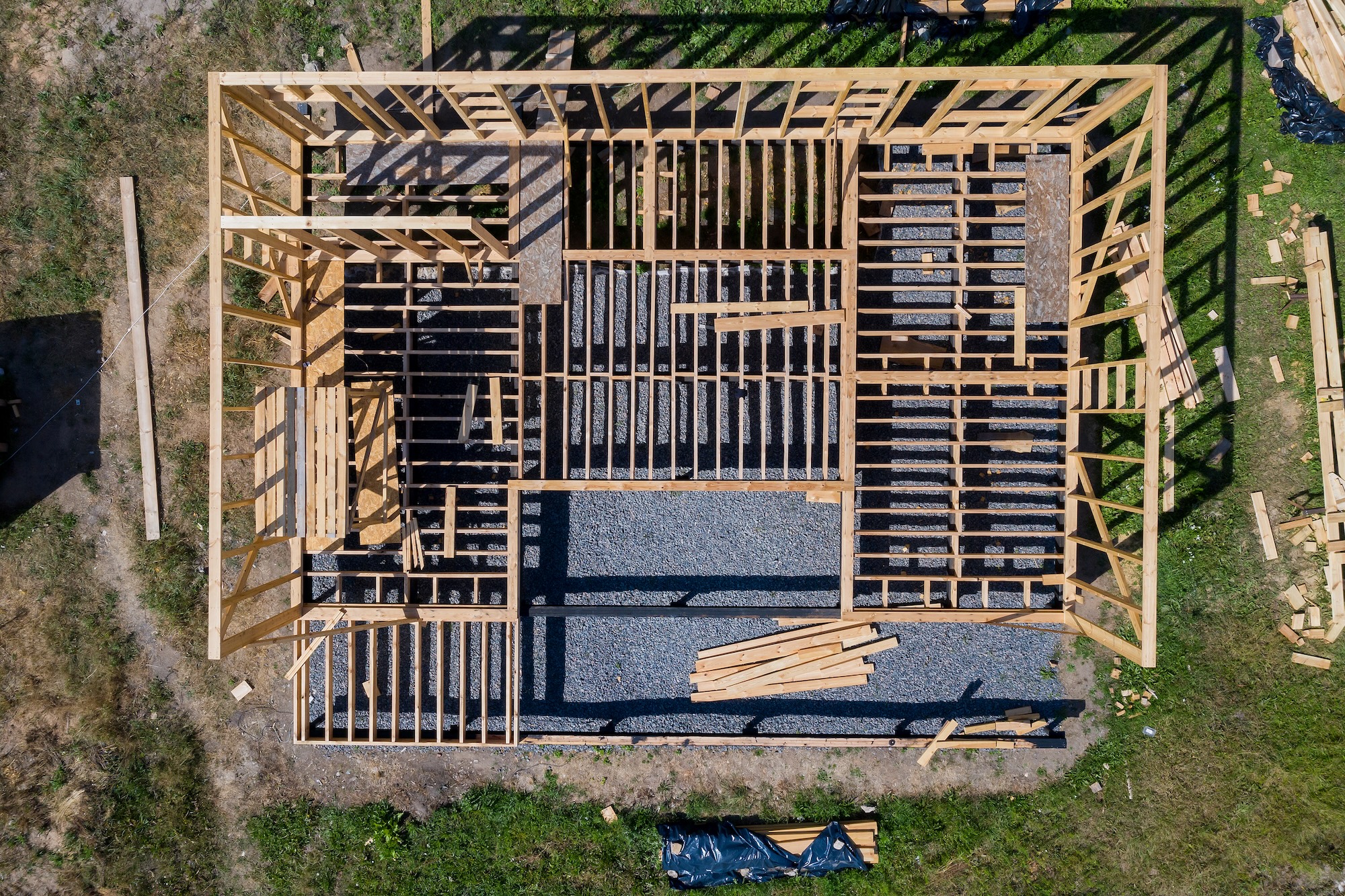

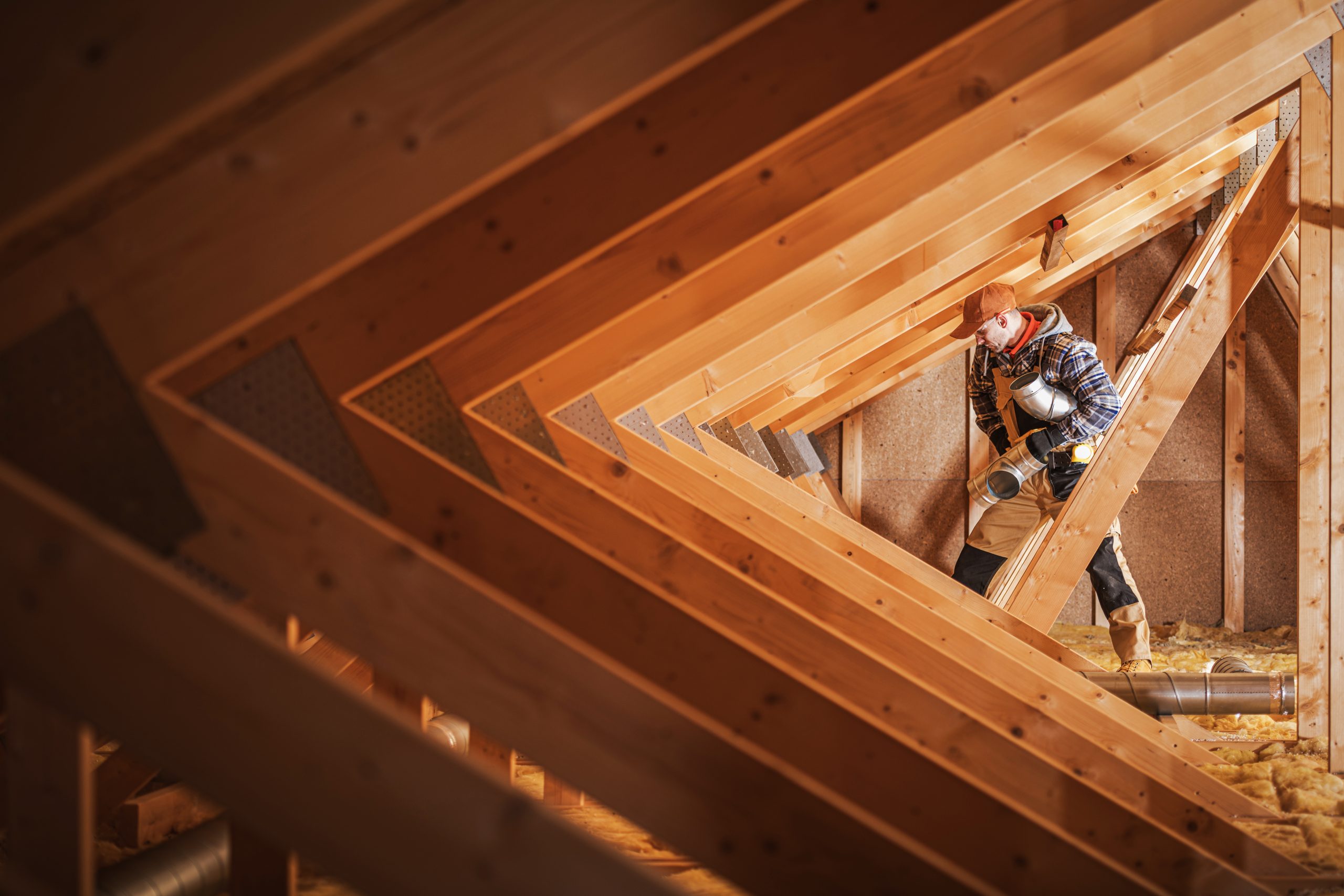
Wood framing for a commercial or residential new-build requires careful planning and execution, starting with the design all the way through to completion. It requires experts who know how to choose the best wood in Utah, as well as framing crews who have the skills and knowledge to build sound structures that will weather anything Utah can dish out, including rain, wind, snow and earthquakes.
If you’re planning to build in Utah, consider cost-effective wood framing to give your structure the flexibility, sustainability and insulation it needs. Hardcore Constructors has spent the past decade framing more than a hundred buildings and can walk you through the process so you know what to expect.
Planning to Wood Frame
The wood framing process begins long before the first joist or stud is nailed in. It starts with an architect, engineer and blueprints to show how the structure, or skeleton, of the building will be put together.
- Design
Wood framers depend on plans, drawn up by an architect and approved by an engineer, to guide them as they build and install wood joists, subfloors, framing and roof trusses, placing each piece of wood vertically, horizontally or diagonally to specification. These plans, or blueprints, remain on site and are referred to often. During framing, modifications may be required with final approval by city inspectors.
- Permitting
After the engineer signs off on the architect’s plans, the permitting process begins with the city for final approval. Inspections will be made throughout all stages of the building process with a specific inspection focused on the wood framing.
- Procuring Wood
Choosing the best wood for framing will impact the quality of the build. That means high quality lumber, which has been stored properly and kept dry with no shrinkage, decay or pests.
Lumber for wood framing, such as Douglas Fir or Pine, is graded according to its grain and visual defects. The highest grade typically has no visual defects or knots with the lowest grade having the presence of bark and knot holes. A middle grade, which is structurally sound but may also show some cosmetic defects, is typically chosen for framing.
In addition, pressure-treated wood is procured for any framing that will come into contact with moisture-prone areas like a concrete foundation, while untreated wood is used for framing tied to other lumber in subfloors and walls.
Wood Framing Process
Once the framing plans are finalized, the wood delivered, and the foundation poured, it is time to start framing.
Treated wood provides the first barrier between the concrete foundation and the untreated framing above. The first layer of joists provides structural support on top of the foundation for the subflooring.
Once the building’s floor takes shape, it’s time to frame all of the exterior and interior walls, according to the plans. In Utah, that means 2 x 6 exterior walls to provide enough room for insulation from cold and heat, with metal straps that will allow the structure to move if there’s an earthquake. Interior walls separate rooms and provide space for plumbing, electrical and HVAC. If there’s a second floor, more structural joists and subflooring come next before second floor walls are framed.
The roof, which is often framed with pre-fabricated trusses, is installed on top of structural and exterior walls. If the plans call for open cathedral ceilings, the roof could be hand-framed, which will add to the timeline and cost of the framing job.
Depending on the size and complexity, you can expect wood framing and sheathing to take between two and six weeks to complete.
Wood Framing Delays
While wood framing can go up quickly with readily-available lumber and sunny, dry weather, the timeline can take a hit in the event of supply chain delays or rain.
Supply Chain Delays: Supply chain issues, truck driver or logger shortages, increased demand or softwood lumber tariffs can slow the start of any wood framing project. These issues can also affect the cost.
Weather: Utah is known for its hot, dry summers, but it’s also known for freezing winters with up to 50 inches of rain, depending on the region, and more than 4-feet of snow annually. Inclement weather can delay wood framing schedules in order to keep lumber dry and avoid moisture, which can cause warping, shrinkage and dry rot.
Once the building is enclosed, wood is one of the best insulators against the elements.
Costs
The cost to frame a house or building in Utah typically ranges from $11 to $30 a square foot, including labor and lumber. Larger homes and more complex designs will increase the cost and can lengthen the timeline of wood framing.
Additional Considerations
While wood framing is the most cost-effective and sustainable structure for a home or building, there are other considerations to ensure your new-build remains sound for years to come.
Dry Rot & Pests
If untreated wood for a new-build is not stored properly, or is allowed to sit in the rain for an extended period of time, it could end up warping or shrinking. Unprotected wood exposed to extreme moisture can also dry rot. Damp wood attracts termites, which eat the cellulose in lumber and can compromise its integrity. Drywood termites, which thrive in above-ground wood, can be prevented by avoiding contact with the soil.
Fire
While wood framing is more combustible than metal framing, finished buildings can be made more fire resistant with protective gypsum wallboards and fire-retardant wood treatments. Fire sprinklers, alarms and other active systems also protect wood-framed structures, once complete.
Structural Movement
Utah is situated in an active seismic zone, which makes wood framing the best choice for buildings in the event of an earthquake. Not only is wood lighter and more flexible than other materials, Utah’s building codes ensure structural stability by requiring wood framing be securely anchored to the foundation and that the roof, floors and walls are tied together. Larger openings for garage doors and windows are also reinforced.
Wood Framing Endures
It is no wonder wood framing remains the popular choice for home-building in Utah, due to its lower cost, availability, insulation value and ease of construction. Wood frame is used to build more than 90% of new homes compared to non-wood framing methods like concrete or steel.
Hardcore Constructors has framed more than a hundred homes and buildings in five states, including Utah, and has the experience and crews to procure the best lumber, while framing your project on schedule and on budget. Let them show you how wood framing can give your new-build its best structure for years to come.